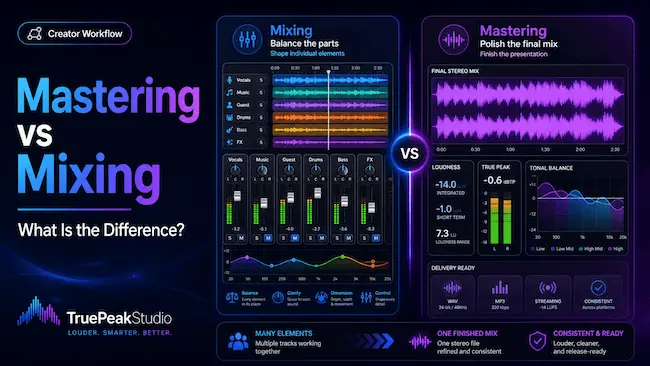
Mixing shapes the individual parts
Mixing is where separate elements are balanced together. In music, that may include vocals, drums, bass, instruments, and effects. In podcasting, that may include host audio, guest audio, music, ads, and transitions.
The goal of mixing is to make all parts work together clearly before the final file is created.
Mastering polishes the final file
Mastering works on the completed mix. It focuses on final loudness, tonal balance, clarity, consistency, and delivery readiness.
Mastering should not be used as a rescue step for an unfinished mix. It works best when the mix already sounds balanced.
Why the difference matters
If vocals are buried, background music is too loud, or a guest track is much quieter than the host, those issues are best addressed during mixing.
If the finished file needs polish, stronger loudness, smoother tone, and more consistent final presentation, that is where mastering helps.
How creators should prepare
Before mastering, listen to the full mix. Fix major balance problems, remove obvious mistakes, and avoid clipping.
Once the mix feels complete, export the best version and use mastering for the final release polish.
Final thought
Mixing builds the foundation. Mastering finishes the presentation. When both steps are handled well, your final audio sounds more intentional and professional.